Building a machine learning model is only one part of a successful data science project. Although experiments help professionals test algorithms, identify patterns, and measure prediction accuracy, businesses need models that can operate within real applications and deliver useful outcomes. Model deployment makes this possible by connecting trained models with systems that support everyday business operations. Learners pursuing Data Science Training in Chennai can strengthen their understanding of this important stage of the machine learning lifecycle. Developing deployment knowledge also helps aspiring professionals move beyond theoretical exercises and gain the practical abilities required in modern data-driven industries.
Moving from Experimental Models to Production Environments
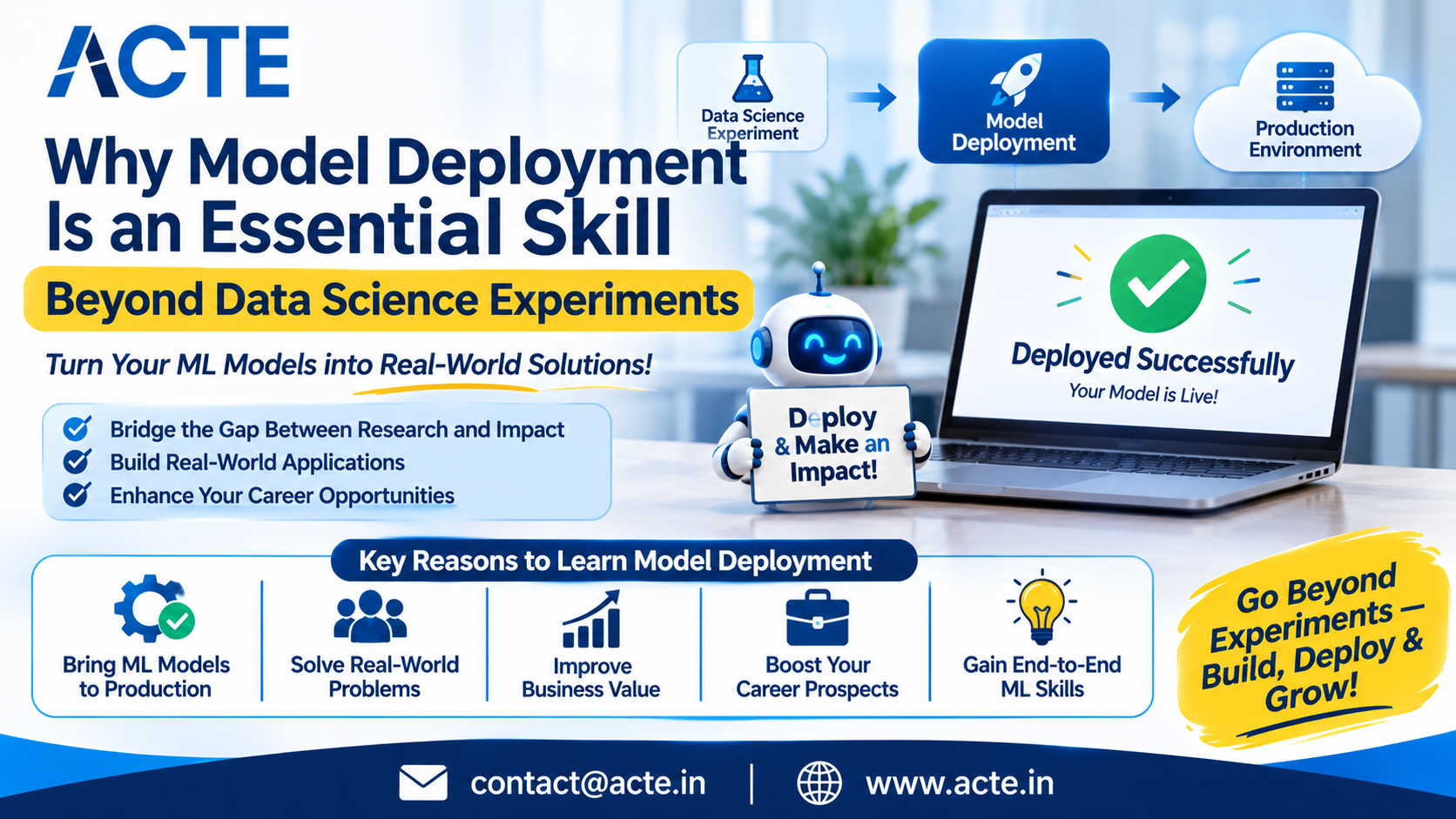
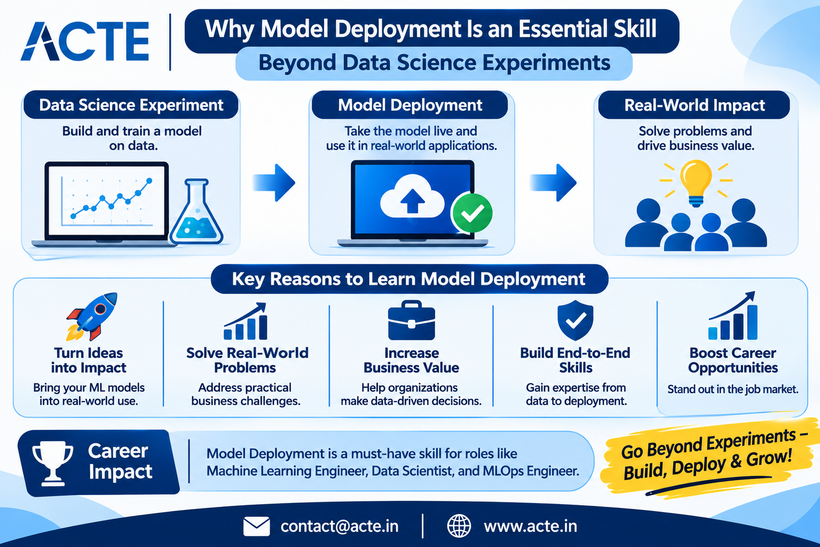
During the development stage, data scientists work with datasets, experiment with algorithms, adjust parameters, and evaluate model performance. These activities help determine whether a solution can make accurate predictions under controlled conditions. However, a model that performs successfully in a notebook may require additional preparation before it can function reliably in a production environment. Deployment involves making the trained model available through an application, API, or business platform. This process requires managing dependencies, preparing infrastructure, testing integrations, and ensuring that the model can receive new data. Understanding this transition allows data scientists to recognize the difference between creating a promising experiment and delivering a working solution.
Enabling Organizations to Apply Predictive Insights
Businesses generate large amounts of information, but its value depends on how effectively they use it. Deployed machine learning models help organizations convert historical and incoming data into predictions that support faster and more informed decisions. For instance, e-commerce companies can use recommendation models to suggest relevant products, while banks can implement fraud detection systems to identify suspicious transactions. Manufacturing organizations can deploy predictive maintenance models to identify equipment problems before failures occur. Similarly, logistics companies can use forecasting solutions to estimate delivery requirements and improve resource allocation. These applications demonstrate how deployment allows data science initiatives to contribute directly to business performance.
Learning the Technologies Used in Model Deployment
Practical deployment requires knowledge of technologies that connect machine learning models with software applications. Python frameworks such as Flask and FastAPI are commonly used to create APIs through which applications can access model predictions. Docker supports consistent packaging of applications, while cloud services provide computing resources for hosting and managing deployed solutions. Version control systems such as Git also help teams manage development changes and collaborate efficiently. Professionals exploring Data Science Training in Bangalore can benefit from learning how these technologies support the movement of machine learning models from development environments to production systems. Familiarity with deployment frameworks and infrastructure makes it easier to understand practical project requirements.
Maintaining Accuracy Through Continuous Model Monitoring
A deployed model must continue producing dependable results after it becomes part of a business application. Real-world conditions can change, and new data may differ from the information used during training. Customer behaviour, market trends, seasonal demand, and business processes can all influence prediction quality over time. Continuous monitoring helps identify these changes by tracking model accuracy, response time, prediction patterns, and system performance. Data drift occurs when the distribution of incoming data changes, while concept drift refers to changes in the relationship between input information and the target being predicted. Data scientists must understand these issues and take corrective action through updated datasets, model retraining, and improved deployment practices.
Addressing Reliability, Security, and Scalability Requirements
Production systems must handle challenges that are often absent from small-scale experiments. A deployed model may receive thousands of requests, process sensitive information, and operate alongside several connected applications. Therefore, data scientists need to consider system reliability, infrastructure capacity, data protection, and response speed when preparing models for production. Scalable deployment environments help applications manage growing workloads, while authentication and access controls protect model services from unauthorized use. Testing and error-handling mechanisms also reduce the risk of service interruptions. Learning these concepts helps professionals understand why a successful machine learning solution must be technically dependable as well as accurate.
Showcasing Practical Expertise Through Complete Projects
Employers often look for candidates who can explain how they developed and implemented a machine learning solution rather than simply describe the algorithms they studied. End-to-end projects provide opportunities to demonstrate data preparation, model selection, evaluation, deployment, and performance monitoring. They also show how candidates approach practical challenges and connect technical decisions with business requirements. Projects such as customer churn prediction platforms, sales forecasting applications, loan risk assessment systems, and product recommendation services can demonstrate these capabilities. A well-organized portfolio should explain the problem, dataset, methodology, deployment process, and results. Learners considering Data Science Training in Hyderabad can focus on practical implementation to build project experience that reflects real industry workflows.
Developing Career Readiness with Production-Level Skills
Data science professionals frequently work with software engineers, machine learning engineers, cloud specialists, and business teams. Understanding deployment makes collaboration easier because professionals can communicate technical requirements, integrate models with existing systems, and contribute to production-related decisions. It also introduces important practices such as automated testing, application integration, version management, and deployment maintenance. A structured Data Science Course Training program can help learners develop a stronger foundation in these areas through practical exercises and project-based learning. Combining programming, machine learning, cloud fundamentals, and deployment knowledge prepares candidates to handle responsibilities that extend beyond experimentation and model evaluation.
Conclusion:
Model deployment plays a significant role in transforming data science experiments into solutions that organizations can use in everyday operations. Developing an accurate algorithm is important, but making it accessible, secure, scalable, and reliable determines how effectively it can solve practical problems. Professionals with deployment knowledge can participate in more stages of the machine learning lifecycle and contribute to projects that deliver measurable business benefits. Building these skills helps aspiring data scientists strengthen their technical capabilities and prepare for the expectations of modern industry roles.