Cloud computing has become a key technology for businesses that want to improve efficiency, manage digital resources, and deliver applications without depending entirely on traditional infrastructure. Organizations across industries are using cloud platforms for data storage, software development, application hosting, and business operations. This growing adoption has increased the demand for professionals who can manage cloud environments and support modern IT systems. For individuals planning to enter this field, learning the right technical skills can create a strong foundation for career development. Knowledge of cloud platforms, networking, security, automation, and DevOps can help candidates prepare for the expectations of today's job market.
1. Understanding Cloud Computing Principles
Learning the fundamental concepts of cloud computing is essential before working with advanced platforms. Professionals should understand the three major service models: Infrastructure as a Service, Platform as a Service, and Software as a Service. They should also become familiar with public, private, hybrid, and multi-cloud deployment approaches. Other important concepts include virtualization, resource allocation, scalability, cloud storage, and workload management. This knowledge explains how cloud services operate and how organizations use them to support business applications. Beginners can develop these fundamentals through Cloud Computing Training in Chennai, which provides a starting point for exploring cloud technologies.
2. Exploring Leading Cloud Platforms
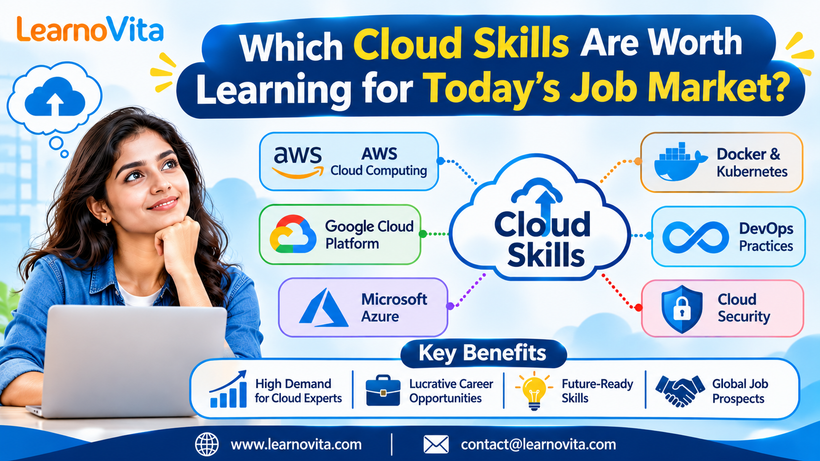
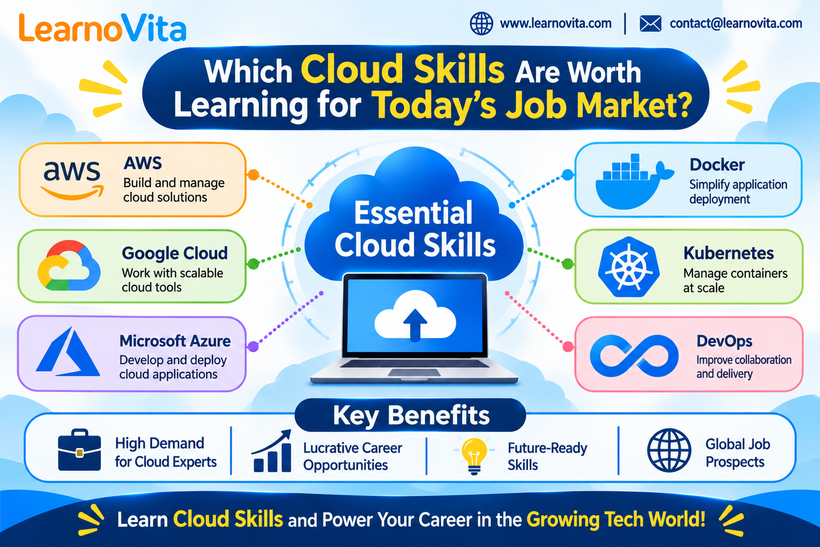
Practical knowledge of major cloud service providers is valuable for professionals entering the industry. Amazon Web Services, Microsoft Azure, and Google Cloud Platform provide a wide range of services for computing, storage, networking, databases, and application deployment. Learners should practice creating virtual machines, configuring storage, managing databases, and deploying basic applications. They should also understand how to monitor cloud resources and control access to services. Beginning with one platform can make the learning process easier, while exploring additional providers later can improve technical flexibility. Cloud Computing Training in Bangalore can help learners become familiar with important cloud services and practical workflows.
3. Strengthening Linux and Networking Fundamentals
Cloud professionals frequently work with servers, operating systems, and network configurations. Linux administration is particularly useful because many cloud environments use Linux-based systems. Important skills include command-line operations, file management, user administration, permission settings, package installation, and system monitoring. Networking knowledge is equally necessary for managing communication between cloud resources. Understanding IP addresses, subnetting, DNS, routing, firewalls, VPNs, and load balancing helps professionals configure networks and troubleshoot connectivity issues. Developing these abilities can improve confidence when handling cloud infrastructure and server administration tasks.
4. Learning DevOps Practices and Container Tools
DevOps knowledge helps organizations improve collaboration between software development and IT operations teams. Professionals should understand version control, automated testing, continuous integration, and continuous delivery. Tools such as Git, Jenkins, and GitHub Actions are commonly used to support these processes. Container technologies are also important in modern cloud environments. Docker packages applications and their dependencies into containers, making them easier to run across different systems. Kubernetes helps manage containerized applications and supports automated scaling and deployment. Learning these tools can prepare candidates for cloud operations, DevOps engineering, and application deployment responsibilities.
5. Developing Cloud Security Expertise
Protecting cloud infrastructure and business data is an important responsibility for technology professionals. Learners should understand identity and access management, authentication, authorization, encryption, and network protection. They should know how to configure permissions, secure cloud resources, monitor suspicious activities, and prevent unauthorized access. Knowledge of backup management, disaster recovery, and compliance practices can further improve their understanding of cloud security. The shared responsibility model is another essential concept because it explains how security duties are divided between cloud providers and customers. Practical exposure through Cloud Computing Training in Hyderabad can help learners understand how these security concepts are applied in real environments.
6. Building Programming and Automation Abilities
Programming and scripting skills help professionals automate cloud operations and manage resources more effectively. Python, Bash, and PowerShell are useful for automating repetitive activities such as server configuration, file management, and deployment tasks. Another important technology area is Infrastructure as Code, which allows cloud infrastructure to be defined and managed through code. Tools such as Terraform and Ansible help automate resource provisioning and configuration management. Learning these technologies can reduce manual effort, improve consistency, and simplify the management of complex environments. Practical automation exercises also help learners develop problem-solving skills.
7. Learning Cloud Monitoring, FinOps, and AI Technologies
Cloud infrastructure needs continuous monitoring to maintain application performance and service availability. Professionals should understand how monitoring tools such as Prometheus, Grafana, and provider-specific services track resource usage and identify system problems. Cost optimization is another skill that businesses increasingly value. FinOps practices help teams understand cloud spending, allocate resources efficiently, and control unnecessary expenses. Cloud platforms are also becoming important environments for artificial intelligence and machine learning applications. Understanding how to deploy and manage AI workloads can provide additional technical opportunities. A comprehensive Cloud Computing Certification Training Course can help learners explore these areas and strengthen their overall cloud knowledge.
8. Conclusion:
Cloud computing offers career opportunities in cloud administration, infrastructure engineering, DevOps, security, and platform management. To prepare for these roles, professionals should develop knowledge of cloud architecture, major service providers, Linux, networking, containers, security, and automation. Monitoring, FinOps, and AI-related cloud services are also becoming useful areas of specialization. Along with theoretical knowledge, hands-on experience is essential for understanding how cloud technologies work in professional environments. Building projects, deploying applications, managing resources, and troubleshooting technical issues can help candidates improve their practical abilities. Continuous learning and regular practice can support career growth in the evolving cloud computing industry.